What is Belonging? Where do we belong?
In a world that is marked with constant displacement, one always looks for a place that gives them shelter, the support of community, and most importantly identity. When being constantly displaced, one longs to belong to a place, to be accepted, valued and more than that, be their authentic self.
For an artist, Belonging is a human experience that exists beyond the concept of habitability. It is explored as a feeling of home, stability, harmony and identity through colours, textures, iconographies and a composition that resonates with everyone.
Terrain Curated proudly presents “Belonging”, an exhibition that brings together artists who have explored displacement and migration as a fluid concept marked with history, politics and personal experiences. For them Belonging is not just a theme, it's a feeling of being connected, recognised, accepted and understood and existing in a space where memories and identity are accepted.
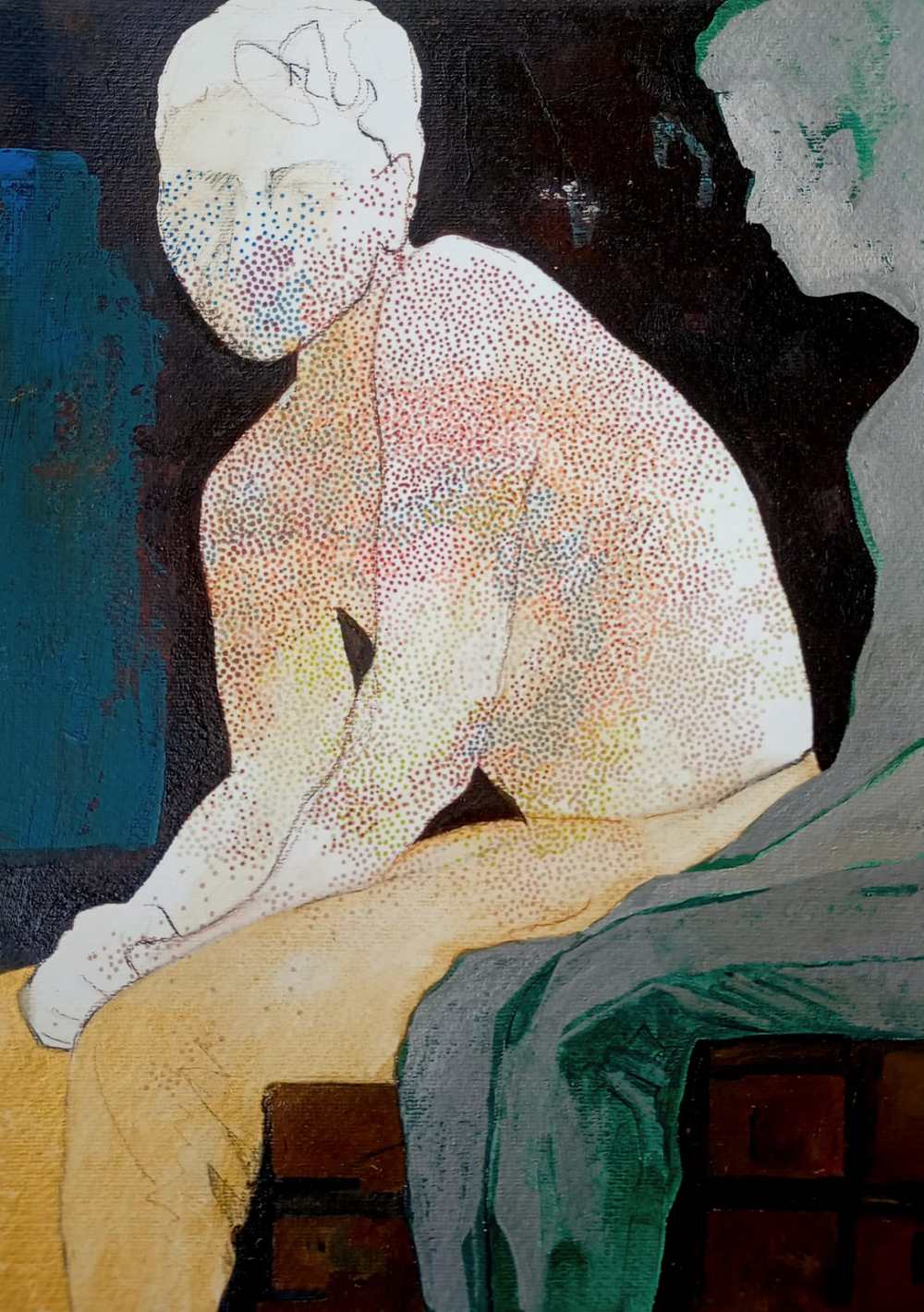
“ I am interested in how displacement leaves traces on the body and memory, and these traces emerge through erosion, concealment, layering, and incomplete forms rather than literal representation.”
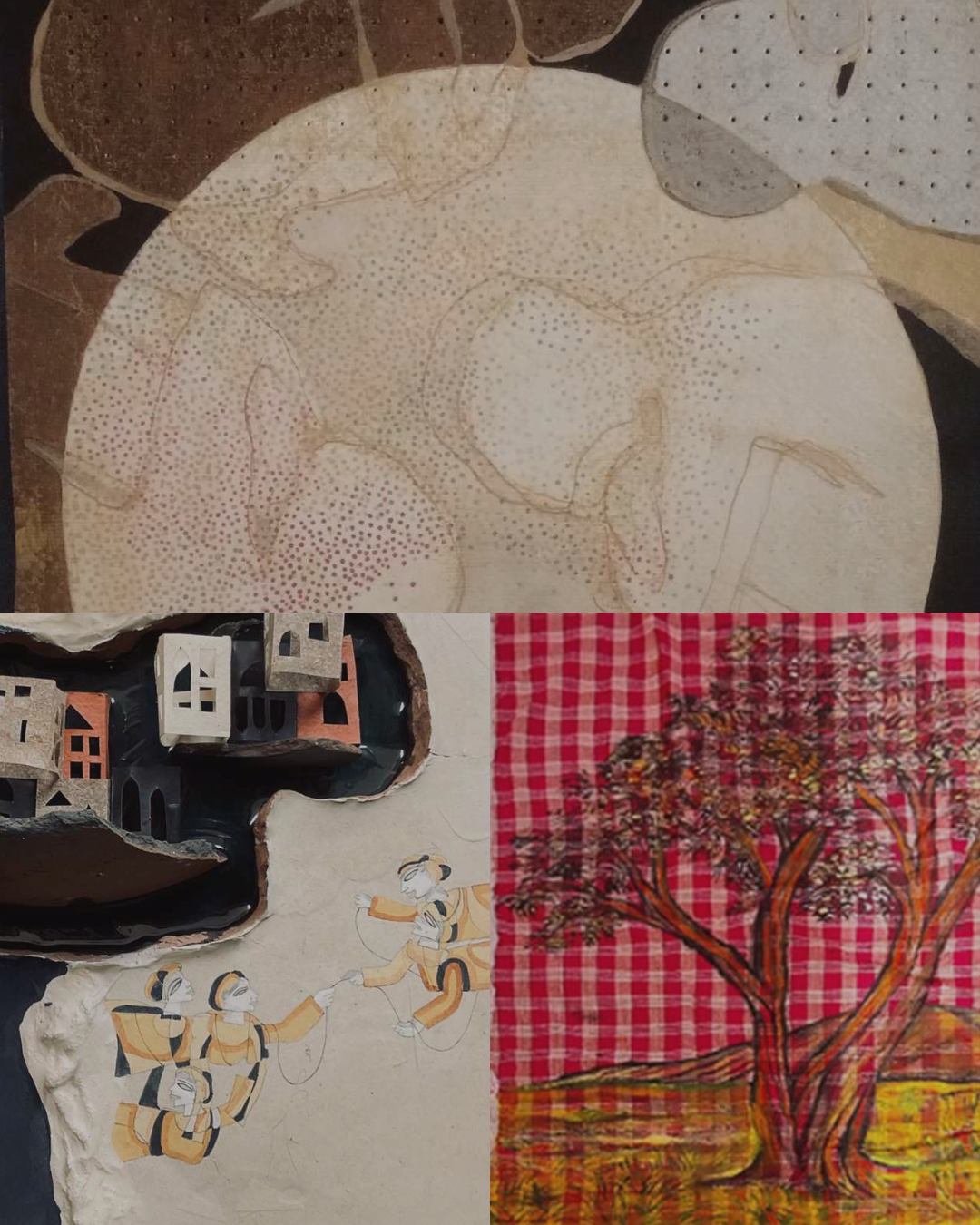
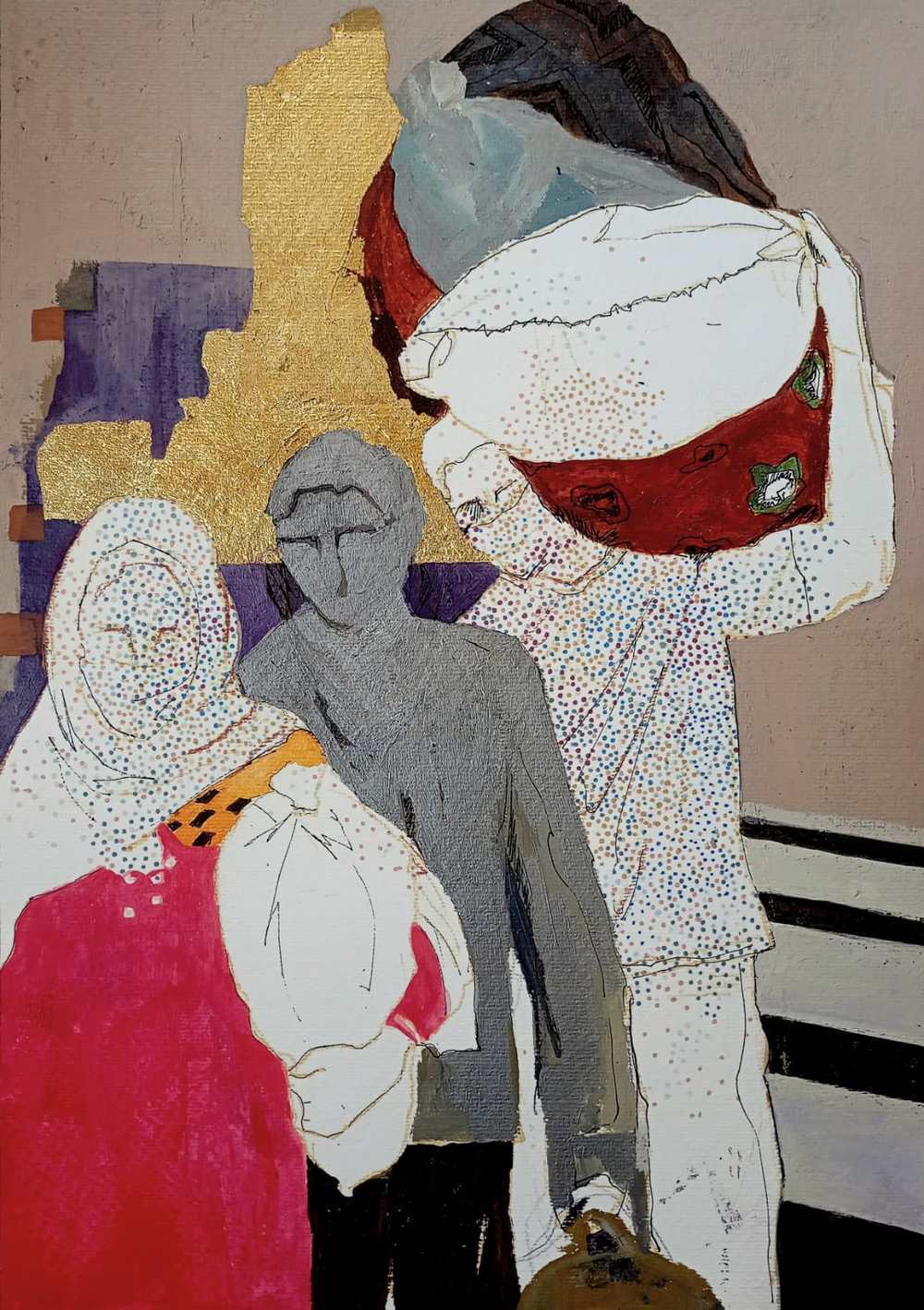
For Artist Anbu Kadhir displacement extends beyond geography. It is an emotional and psychological condition rather than a documentary subject. Her works can be read as psychological maps of layered grounds, fragmented planes and floating forms that function as emotional territories where traces of displacement, longing, endurance, and transformation coexist.
These themes are embedded into her works through materials, layering, and the way the figures occupy space, rather than being directly illustrated. She has translated her experiences into fragmented silhouettes, interrupted surfaces, unstable spatial relationships, and layered materiality rather than through direct storytelling. These elements often behave like traces or remnants, suggesting memories that are partially erased, relocated, or reconstructed over time. The repetitive patterns, stitched contours, metallic fragments, and shifting textures construct imagined geographies of memory, instability, and endurance. These spaces remain intentionally unresolved, reflecting how displacement often exists internally long after physical movement has ended.
The ambiguity within the compositions is intentional because it creates space for personal reflection and multiple readings. The compositions are intended to function as emotional and psychological spaces where viewers can encounter fragments of their own experiences, memories, or uncertainties. Anbu Kadhir’s works invite the viewers to engage with the art slowly, emotionally, and intuitively rather than searching for fixed meanings.
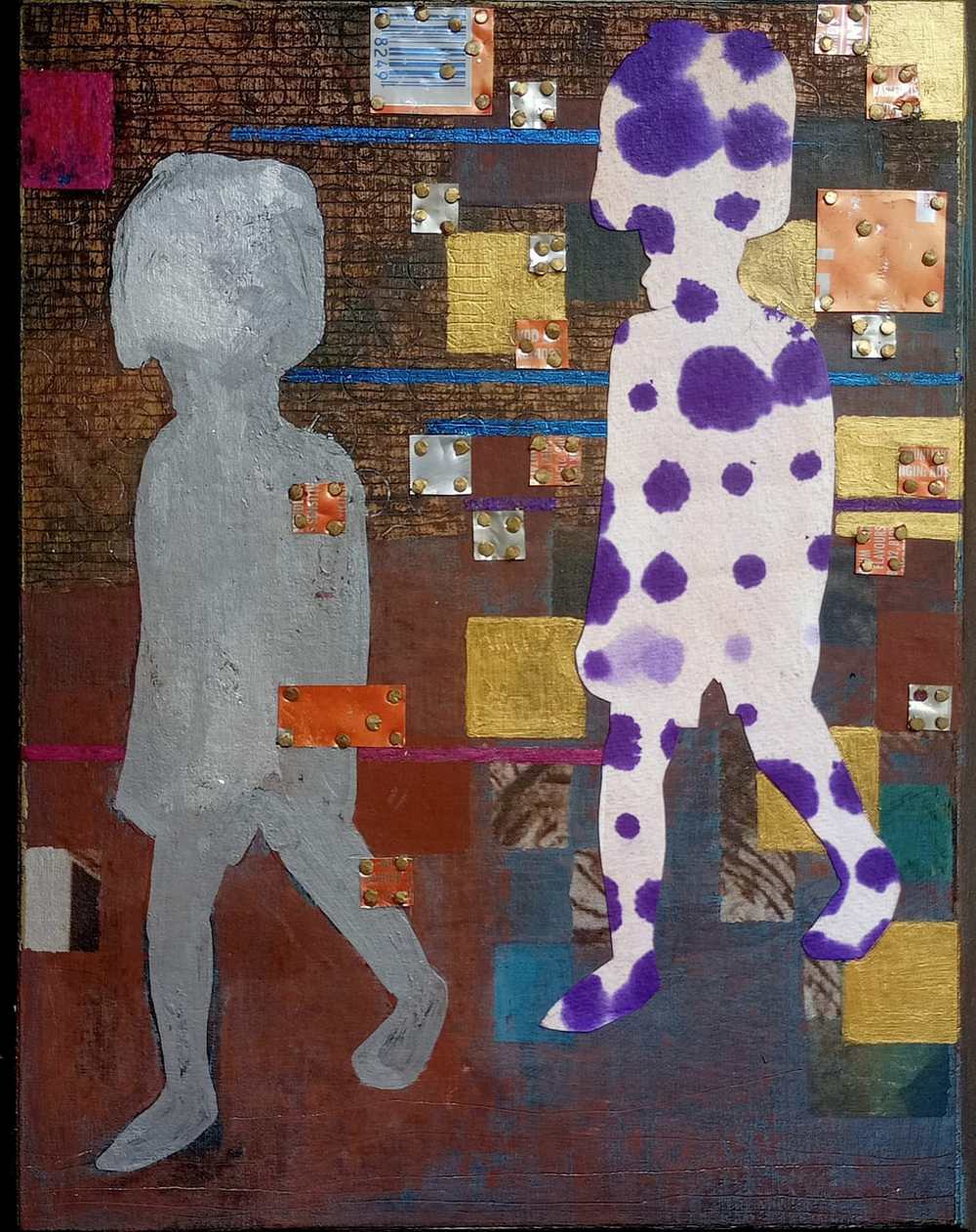
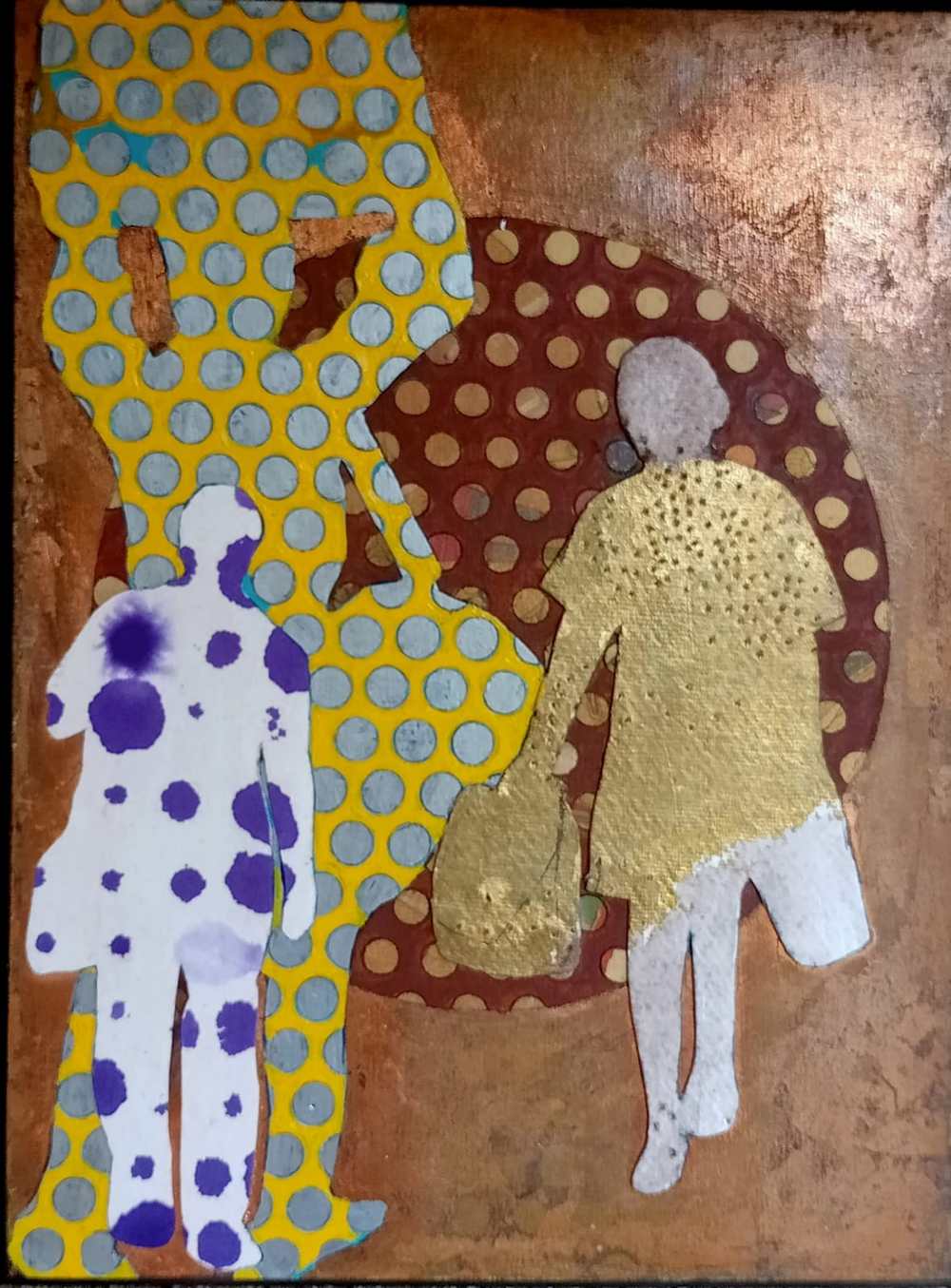
Intangible baggage, 2024
Acrylic, copper leaf, gold leaf, ink, handmade paper on compressed wood panel32 x 29 cm | 12.5 x 11.4 in
“The abstraction and the narratives are balanced by allowing human forms to emerge within fragmented and abstract visual environments. I use abstraction as a way to create emotional openness while allowing narrative fragments to emerge subtly through marks, textures and spatial tensions.”
Anbu Kadhir Jacob
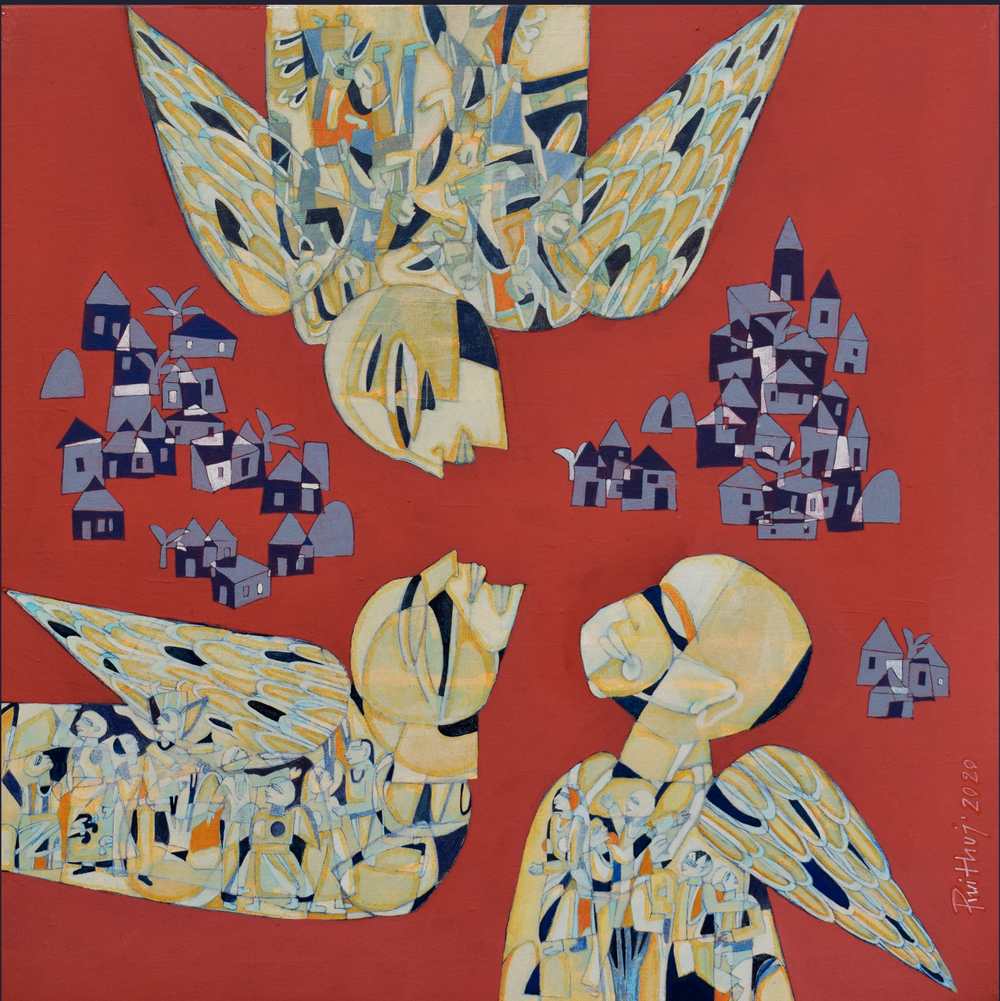
“ Belonging, in my work, is not a fixed condition but an ongoing process of negotiation. My work explores how people create a sense of belonging in unfamiliar environments while carrying memories of where they came from.”
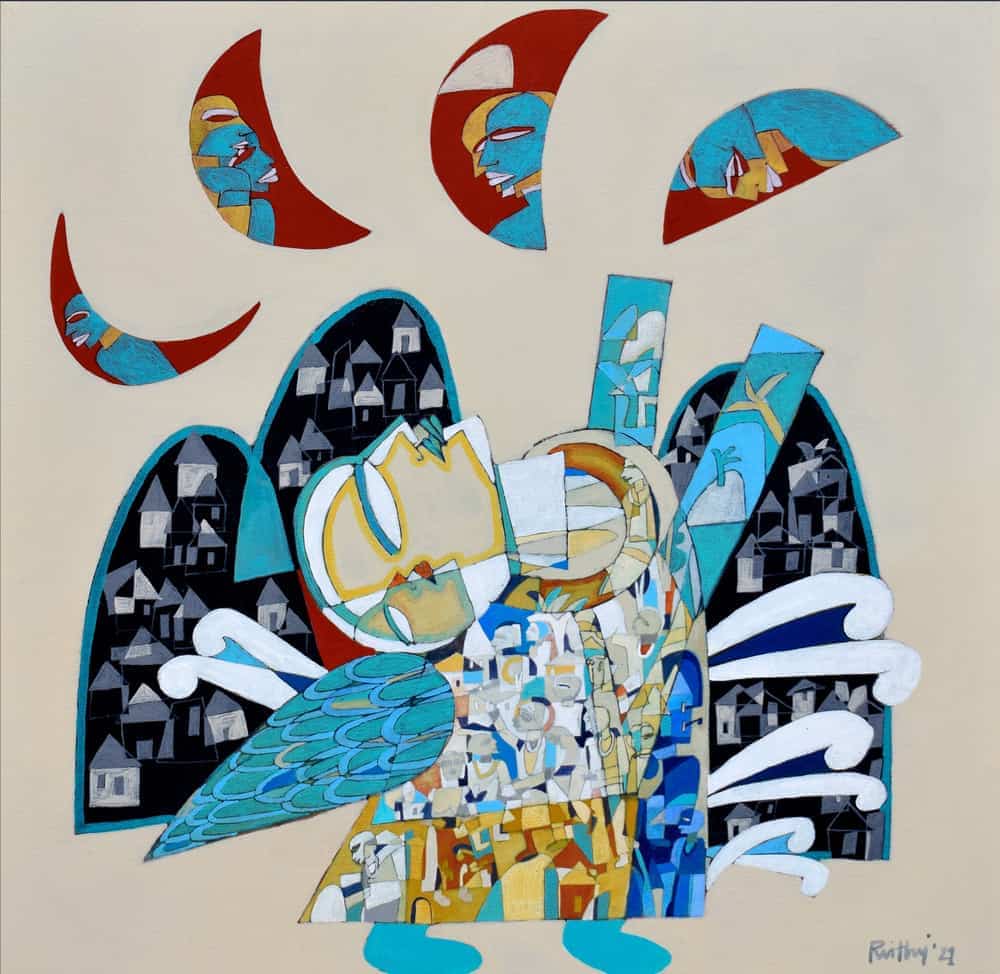
Artist Prithuj Mondal does not see migration as erasing identity; rather for him it adds layers to it. For migrants, the city is often all three, a home, a host, and a habitat. It provides opportunities and shelter, yet it also demands adaptation. The migrants carry their histories into the city and contribute to its evolving character. Migration in his works is often depicted as a force driven by hope but also something that can create feelings of isolation.
He portrays the Urban Transformation through a mushroom, which metaphorically portrays the people who often thrive in overlooked spaces, creating networks of support and resilience. Through this metaphor, he redefines the relationship between humans and the metropolis as one of mutual adaptation rather than simple occupation. The themes of memory and nostalgia appear through recurring motifs, fragmented landscapes and references to rural life. Displacement is expressed through shifting forms and layered compositions, while empowerment emerges through growth, movement, and interconnected structures.
Prithuj Mondal’s work begins with personal observations and experiences, but then expands into broader questions about migration, labour, identity and urbanisation. He hopes that the viewers experience his work with empathy and reflection, and recognise the complexities of migration: the hopes, challenges, losses, and possibilities it contains.
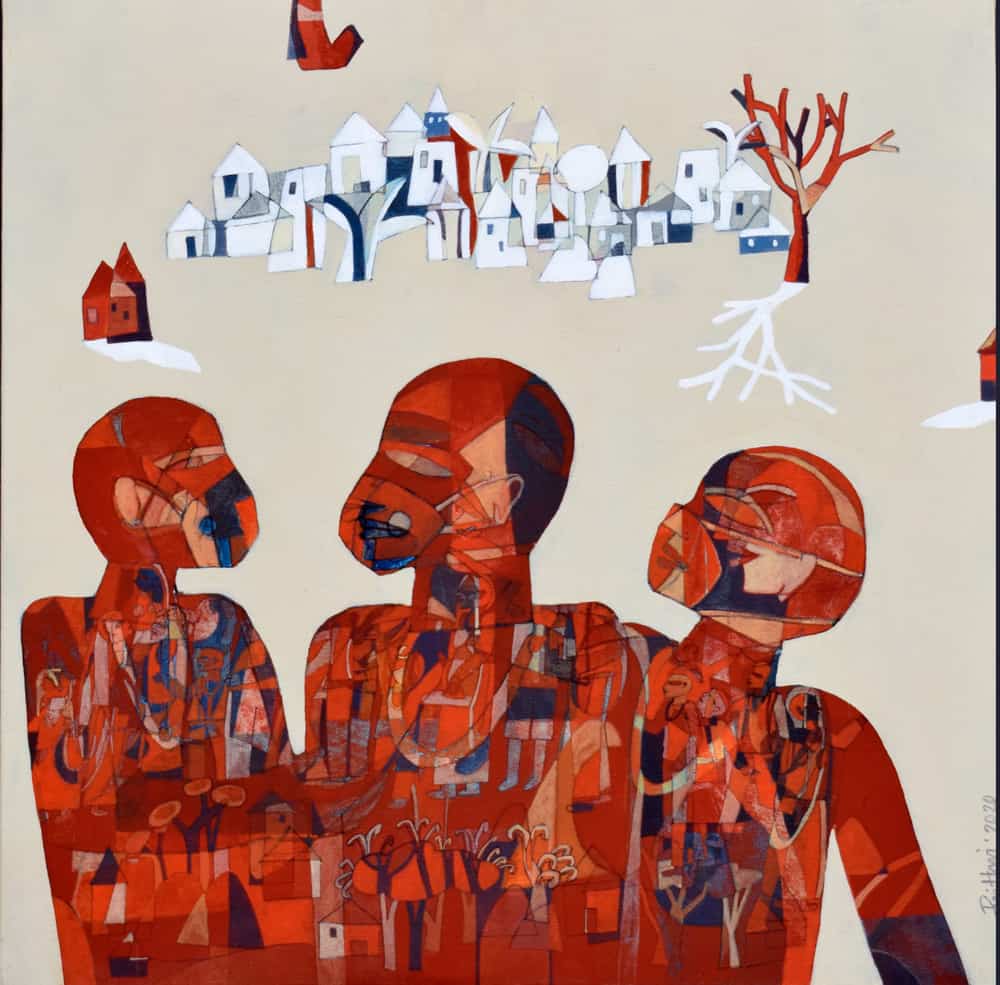
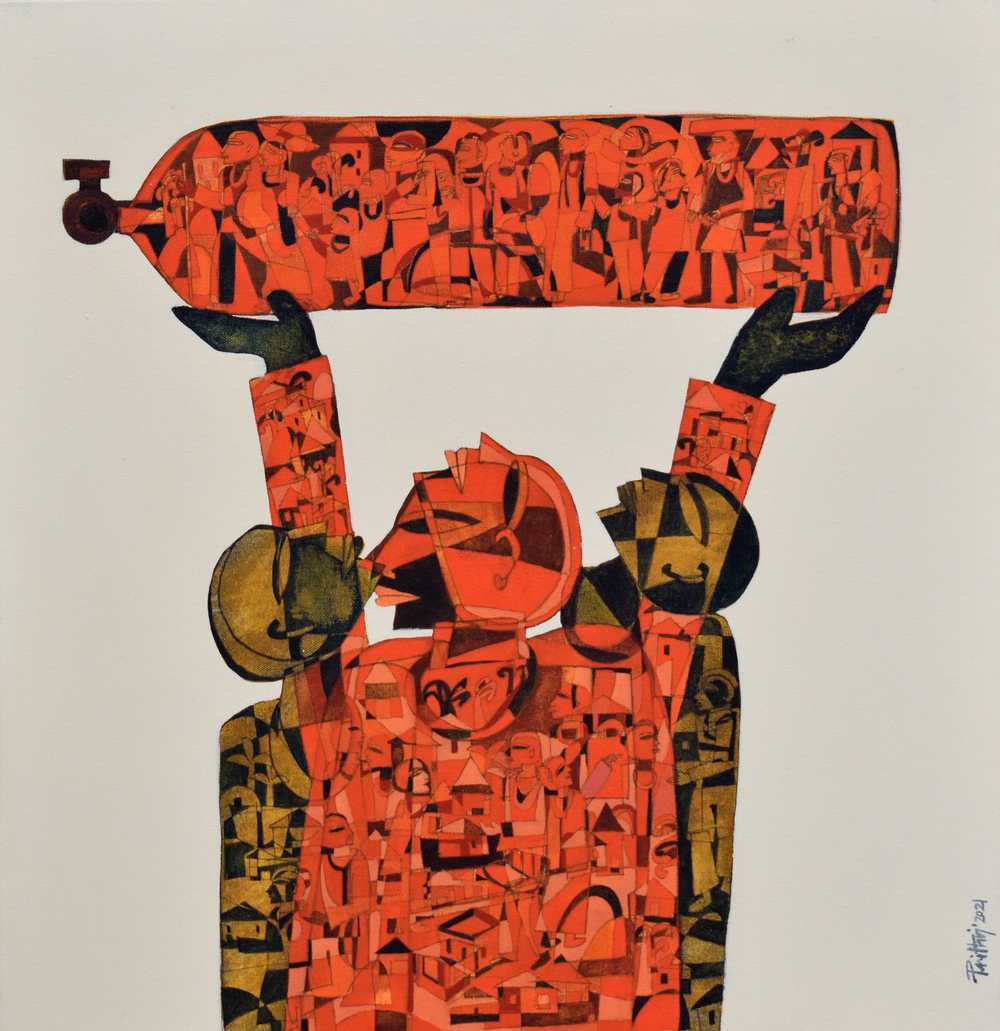
“I would describe my work as exploration of adaptation, resilience, and belonging within contemporary urban life. The city offers opportunities for growth, yet it can also produce loneliness. This duality forms an important emotional layer within my paintings.”
Prithuj Mondal
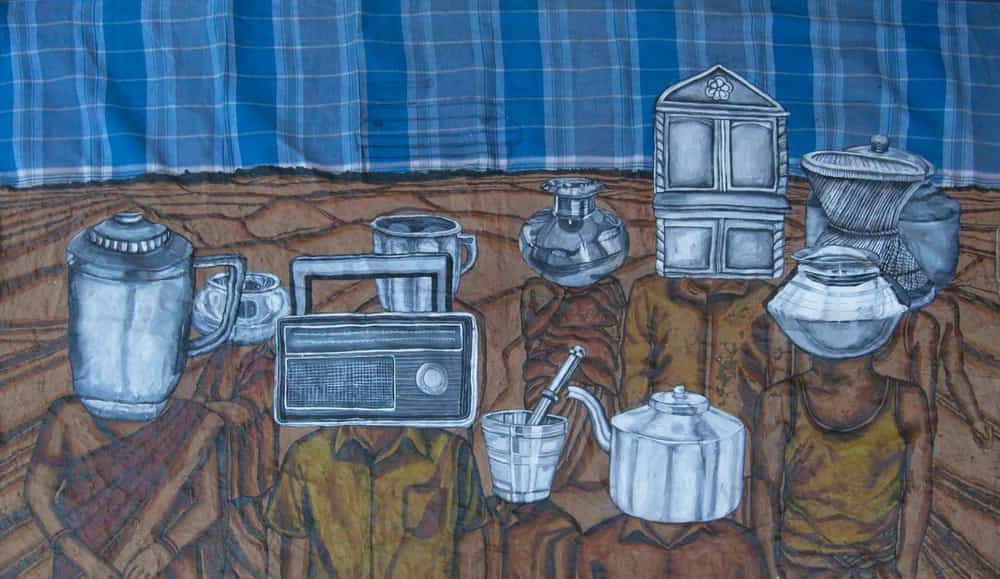
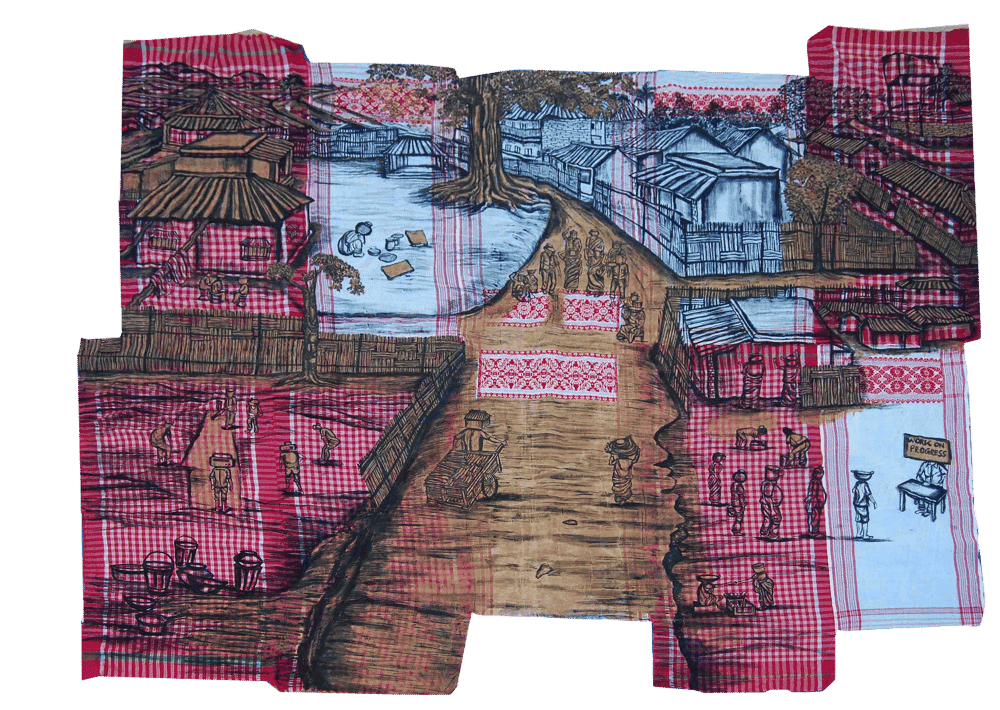
“ Home to me is not just a permanent, stationary structure. I think of home not so much as a place but as an emotional and psychological space created by memory, people, language, rituals, sounds and daily experiences. My childhood was filled with stories of migration and temporary dwelling, so I knew that a house can disappear, change or become faraway, but some feelings and memories stay with us.”
Artist Abhijit Debnath sees memory not just as nostalgia but as something that lives through people, materials, language, and emotions, and survives longer than physical spaces, and displacement as not just physical but also emotional and psychological. In his works, he creates spaces where personal and collective memories can meet, allowing people to reflect on their own ideas of home, migration, and identity. To him, the idea of home is not fixed, but constantly negotiated. It is less about owning something and more about connection, care and the feeling that you can exist meaningfully in a space, even if it’s only for a short time.
He works with materials like cloth, found objects, bamboo, paper, stitching, sound and locally available materials because they carry a sense of use, movement and time. These materials age, shift, tear, collapse, or transform allowing the work to hold traces of process, labour, memory and human presence. This connection between lived experiences and shared history holds a significant place in his craft.
Abhijit does not expect the viewers to settle on a single fixed meaning when engaging with his work, instead he hopes that they experience reflection, emotional connection, and awareness of space, memory, and presence.
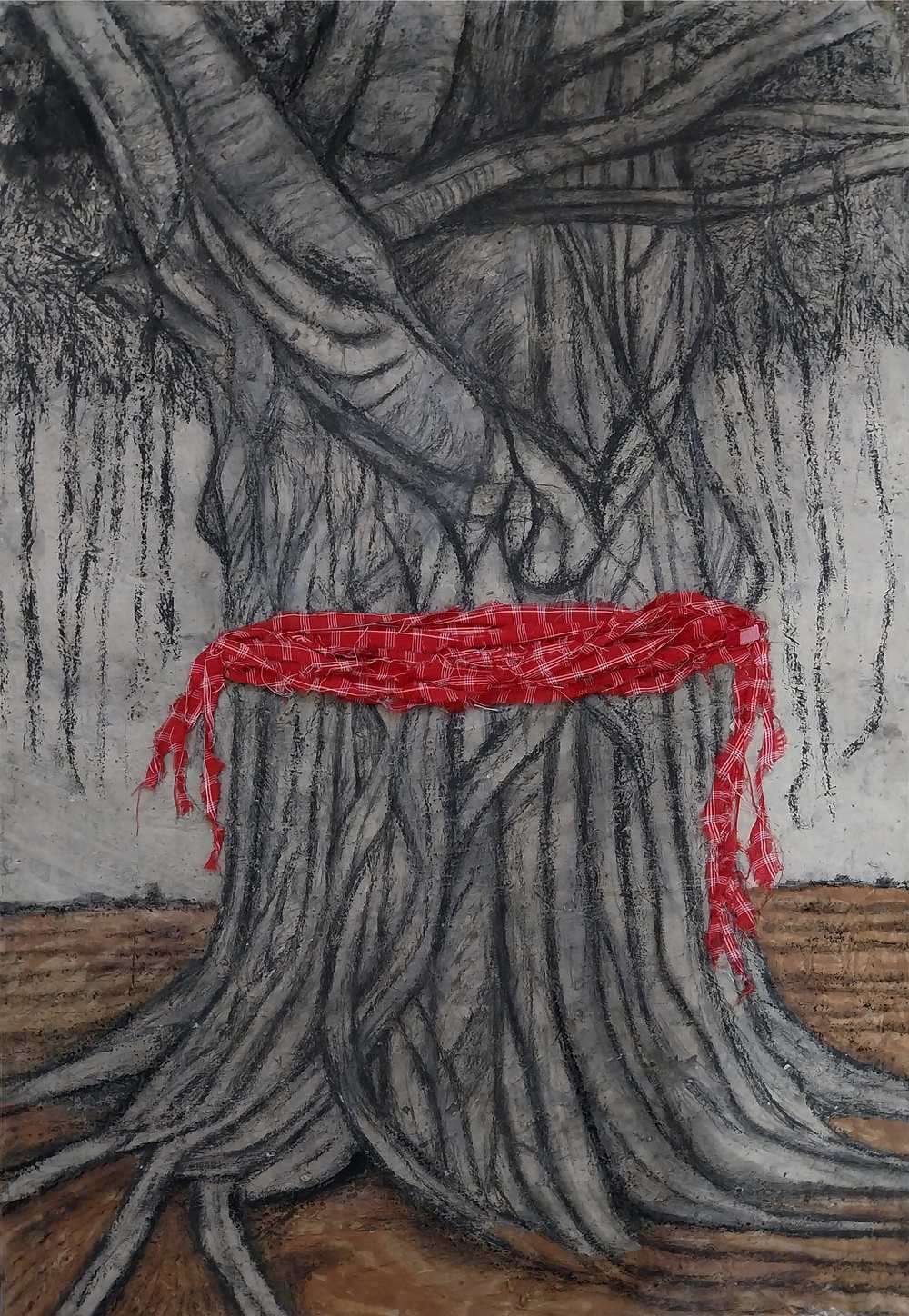
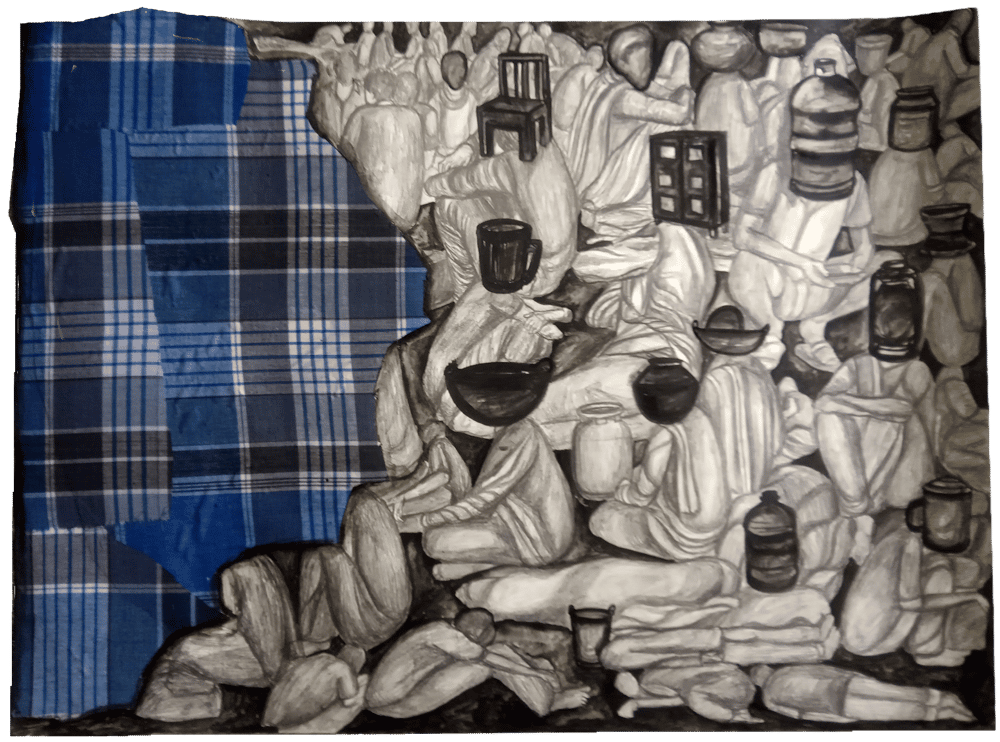
“My work is an exploration of memory, displacement, belonging, and the fragile relationship between people, materials, and place. I want viewers to become conscious of the fragility of existence, and feel that the work is alive with traces of human presence and time.”
Abhijit Debnath